
The 2026 Guide to Executive Protection Standards for Modern Businesses

In today’s threat environment, corporate leaders and their families face a range of security challenges – from targeted crime and terrorism to sophisticated digital attacks. U.S. law and policy now treat protecting traveling or high-profile employees as part of an employer’s duty-of-care. For example, experts note that companies increasingly face ethical and legal obligations to safeguard executives, especially when abroad. Under OSHA’s General Duty Clause (29 CFR § 5(a)), an employer must provide “a place of employment which are free from recognized hazards…likely to cause death or serious physical harm”. In practice this means that credible security threats to executives must be actively managed or the company risks regulatory liability. Meanwhile, federal law enforcement guidance (e.g. DOJ policies) has raised the bar on use-of-force and accountability even for private guards, so corporate EP teams must align with these standards to avoid legal exposure.
Public-Private Standards and Frameworks

Industry and government have responded by issuing new standards and oversight. In September 2025, ASIS International (the leading global association for security management) released an Executive Protection Standard – the first of its kind – offering a structured framework for comprehensive protection programs. This standard begins with a detailed risk assessment of the executive’s visibility, organizational value, and threat history, which in turn defines the program’s scope, policies and resources. Key elements include strategic planning and leadership commitment, compliance with laws and ethics, dedicated budgets, and clear communication and emergency protocols. The core protective operations focus on integrated intelligence gathering and security measures – combining physical and digital security – along with close-protection teams, secure transportation, and even medical support for executives. ASIS stresses that every element (from personnel to vehicles to technology) must be continuously evaluated and updated through audits and reviews to adapt to evolving threats.
The ASIS standard also explicitly addresses staffing and compliance. It calls for strict personnel management: agents must meet defined selection criteria, undergo rigorous training, and operate under legal and ethical guidelines. For example, protection teams typically have backgrounds in law enforcement or the military and must meet all state licensing and firearms-permit requirements. In this regard, ASIS notes that programs must document clear “selection criteria, training requirements, [and] legal compliance” for all team members. These provisions underscore that EP agencies or in-house teams should aim for professional certification (e.g. ASIS’s certified protection credentials) and continuous skills development, rather than informal or ad-hoc staffing.
Federal oversight highlights why formal policy matters. A 2017 DHS Office of Inspector General report found that some agency heads had protection details “without clear legal authority,” and it recommended the department adopt explicit directives on when and how security details are authorized. This example illustrates the need for companies to have clear internal policies authorizing any executive protection activities – ensuring decisions are backed by corporate governance and legal review. In short, both public sector guidance and ASIS’s new standard converge on one point: EP must be a managed program integrating strategy, compliance, and operations.
Operational Best Practices for Corporate EP

Advance Planning and Risk Assessment: Best practice calls for extensive advance work. Teams should conduct site surveys and gather intelligence before any travel or public appearance. This includes monitoring U.S. government and intelligence reports: for instance, DHS’s Homeland Threat Assessments and State Department travel advisories can reveal regional dangers. ASIS’s framework emphasizes beginning with a comprehensive threat analysis of the executive’s profile. In practical terms, this means evaluating factors like travel itineraries, the executive’s digital footprint, and recent security incidents. Based on this, the program defines safe routes and contingencies, secure venues, and communication plans. Detailed travel plans should incorporate alternate routes and evacuation procedures, and teams often deploy advance agents to pre-inspect locations. Such planning is mandated by ASIS standards: each potential risk is “addressed and contingencies are in place” through coordinated operations.

Transportation Security: Secure travel is a core element of EP. All vehicles should be vetted and maintained to professional safety standards. Drivers and agents receive defensive-driving training, and convoys often use unmarked vehicles for anonymity. The ASIS standard explicitly lists “transportation security” as crucial. Typical protocols include using pre-planned safe routes that avoid high-threat areas, running decoy vehicles, and equipping cars with GPS tracking and direct radio links. Importantly, vehicles must meet relevant regulations (for example, DOT vehicle inspections if using large transports or clear occupant safety rules) even as they are up-armored or modified for protection. In cities, plans may also involve secure parking and coordination with local law enforcement for motorcade support.
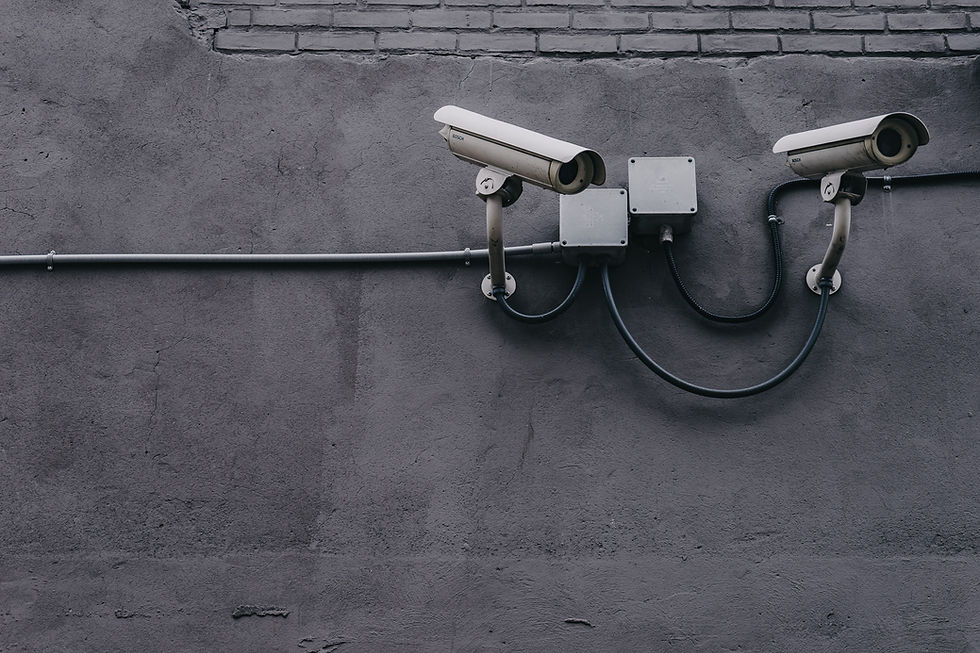
Surveillance and Intelligence Gathering: Modern EP leverages technology and intel. Protective teams employ cameras, drones, and other surveillance tools to monitor surroundings. However, any surveillance use must comply with privacy laws. For example, DOJ policy notes that Title III of the U.S. Code prohibits private interception of communications (wiretaps or “bugs”) without a court order. This means private EP teams cannot lawfully listen to phone calls or hidden conversations; they rely instead on overt CCTV, license-plate readers, or GPS tracking (with consent) which are legal under current law. EP programs should have clear policies on surveillance use – typically focusing on non-wiretapping measures (video surveillance in public areas, overt vehicle monitoring, etc.) and ensuring any electronic monitoring (e.g. mobile app location tracking) respects state and federal statutes. In practice, compliance often means consulting legal counsel before deploying any covert tech.

Force and Engagement Rules: Although private guards are not police, DOJ’s updated use-of-force policy increasingly applies by analogy. The Justice Manual now requires that any force be necessary, proportionate, and a last resort EP agents should only use force to defend against imminent lethal threats, mirroring the rule that deadly force is allowed only when the agent reasonably believes there is an imminent danger of death or serious injury. Officers must attempt de-escalation if safe, and must render aid after a use-of-force incident. These standards also demand thorough training: DOJ mandates annual use-of-force training, with emphasis on scenario-based exercises, decision-making, and legal updates. In effect, courts now judge private security by DOJ principles, so EP programs must train agents to these federal norms. For example, policies should forbid illegal chokeholds and require immediate medical assistance after any altercation. By adopting these rigorous guidelines, a company not only minimizes liability but also aligns with best-practice “duty of care” expectations.

Residential and Venue Security: Protecting executives at home or temporary residences involves additional measures. Best practice is a layered defense: perimeter alarms, surveillance cameras covering all entry points, and secure access controls (e.g. vetted staff and visitor screening). Many firms design safe rooms or panic alarms in executive residences, and coordinate with local police for periodic check-ins. While there are no explicit federal laws dictating home security measures, companies must still observe local regulations (for example, permit requirements for guard booths or restrictions on surveillance recording). Importantly, privacy laws also apply: hidden audio recording in a home would violate Title III, so surveillance tends to focus on video and passive alarms. Comprehensive EP programs include family security protocols (escort policies for family travel, family training, etc.) as part of the overall plan.

Personnel and Training: Staff qualifications are central. EP teams are most effective when members have diverse security backgrounds and continuous training. In practice, many executives’ protection officers hold advanced certifications (ASIS CPP, PSP, or related credentials) and undergo ongoing specialized courses. ASIS’s standard insists on documented personnel management, including rigorous selection and vetting and regular performance evaluations. Teams should be trained not just in protection tactics but also in cultural sensitivity, communications, legal issues, and emergency medicine. Medical readiness is explicitly called out by ASIS as a program element, and companies often include a medical professional on extended trips. Finally, strict background checks and psychological screening for guards help meet the high ethical and legal standards required by corporate policy.

Duty-of-Care Compliance: Underpinning all these practices is the legal notion of duty-of-care. U.S. authorities treat security negligence as an employer liability. The OSHA General Duty Clause – and related case law – effectively means that known security threats are “recognized hazards” that a responsible employer must address. ACOEM (medical experts) emphasize that failure to protect overseas employees could violate corporate liabilities. Thus, a robust EP program also serves as a compliance program: documenting risk assessments, incident logs, and training records helps demonstrate that the company took reasonable steps to protect its people. In litigation, courts increasingly consider whether a company followed industry “best practices” (such as the ASIS standard or DOJ guidelines) when evaluating liability for a security incident.
Conclusion
Executive protection today goes beyond hired bodyguards and armored cars: it is a sophisticated, enterprise-level program that integrates legal compliance, intelligence, and operations. For corporate CSOs and business leaders, this means aligning security policy with both public standards and private best practices. New guidelines – from the ASIS Executive Protection Standard to DOJ policies – give a clear picture of what “good” looks like: comprehensive risk assessment, meticulous advance planning, strict use-of-force rules, and continuous evaluation. In strategic terms, an effective EP program is a form of risk management that protects both people and corporate reputation. By institutionalizing these standards and investing in trained personnel and technology, companies fulfill their duty-of-care and build resilience: they not only keep executives safe, but also demonstrate governance and foresight to stakeholders in an increasingly complex threat landscape. Ultimately, the 2026 EP program is a business enabler as much as a protective measure, assuring leadership continuity and stakeholder confidence through adherence to established standards.
References
ASIS International. (2025, September 23). ASIS International introduces groundbreaking Executive Protection Standard [Press release]. ASIS International. https://www.asisonline.org/security-news/press-room/asis-international-introduces-groundbreaking-executive-protection-standard/ asisonline.orgasisonline.org
ASIS International. (n.d.). Executive Protection Standard. ASIS International. https://www.asisonline.org/security-news/standards-guidelines/executive-protection-standard/ asisonline.orgasisonline.org
U.S. Department of Homeland Security, Office of Inspector General. (2017, September 14). Management Alert – Unclear rules regarding Executive Protection details raise concerns (Report OIG-17-103-MA). https://www.oig.dhs.gov/reports/2017/management-alert-unclear-rules-regarding-executive-protection-details-raise-concerns oig.dhs.gov
U.S. Department of Justice. (2022). Department of Justice policy on use of force (Justice Manual 1-16.000). https://www.justice.gov/jm/1-16000-department-justice-policy-use-force justice.gov
U.S. Department of Justice. (2020, January). Electronic surveillance (Justice Manual 9-7.000). https://www.justice.gov/jm/jm-9-7000-electronic-surveillance justice.gov
American College of Occupational and Environmental Medicine. (2015). United States’ standards and practices on workplace safety and health: Considerations for employers with overseas employees (ACOEM Policy Statement).acoem.orgacoem.org


Comments